In the story
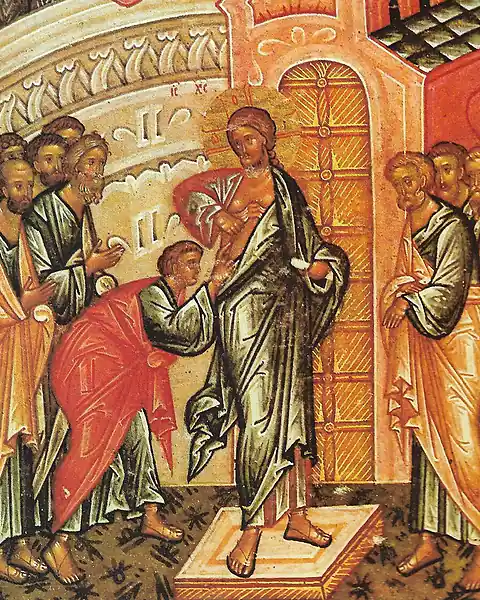
- Unless I see John 20:24–25
- My Lord and my God John 20:26–29
Person · 1 Sunday
തോമാ
“Twin” (Aramaic; Didymus in Greek)
In the readings on 1 Sunday so far.
Name meanings and role notes are drafted with each edition and waiting for review by a priest or editor.
Thomas, called Didymus, the Twin, one of the twelve. He doubted the resurrection until he saw the Lord, then confessed “My Lord and my God.” The Malankara Church traces its faith to his preaching in India.
When Jesus goes to Judea to raise Lazarus, he says, “Let us also go, that we may die with him.”
ScriptureJohn 11:16At the Last Supper he asks, “How can we know the way?” and Jesus answers, “I am the way, the truth, and the life.”
ScriptureJohn 14:5–6Absent when the risen Jesus first appears, he says he will not believe unless he touches the wounds.
ScriptureJohn 20:24–25Eight days later Jesus invites him to touch; he confesses, “My Lord and my God!”
ScriptureJohn 20:26–29He is with the disciples by the Sea of Tiberias, and in the upper room before Pentecost.
ScriptureJohn 21:2; Acts 1:13The Acts of Thomas, a Syriac work of the early third century, tells of his mission to India.
HistoryThe Saint Thomas Christians of Kerala hold that he landed at Kodungallur (Muziris) in AD 52 and founded churches along the Malabar coast.
TraditionEphrem the Syrian (4th century) writes of his relics at Edessa.
HistorySources: The Holy Bible (World English Bible).
Drafted from the Bible and Church tradition. Each line says where it comes from; anything marked Tradition or History is not in Scripture itself. Waiting for review by a priest or editor.
Gospel: John 20:19–31
One of the twelve, called the Twin. By tradition he brought the Gospel to India.
In the story
The Incredulity of Thomas. 15th century. Public domain, via Wikimedia Commons.