In the story
- Moses’ seat Matthew 23:1–3
Group · 5 Sundays
പരീശന്മാർ
Probably “the separated ones”
In the readings on 5 Sundays so far.
Name meanings and role notes are drafted with each edition and waiting for review by a priest or editor.
A Jewish movement devoted to keeping the Law of Moses and the traditions of the elders in everyday life. They often debated with Jesus, and he warned against their hypocrisy, yet Nicodemus, Gamaliel and the apostle Paul were Pharisees.
They keep the tradition of the elders, such as washing hands before eating.
ScriptureMark 7:1–5Unlike the Sadducees, they believe in the resurrection and in angels.
ScriptureActs 23:8They object when Jesus eats with tax collectors and sinners.
ScriptureLuke 15:1–2They challenge his disciples for picking grain on the Sabbath.
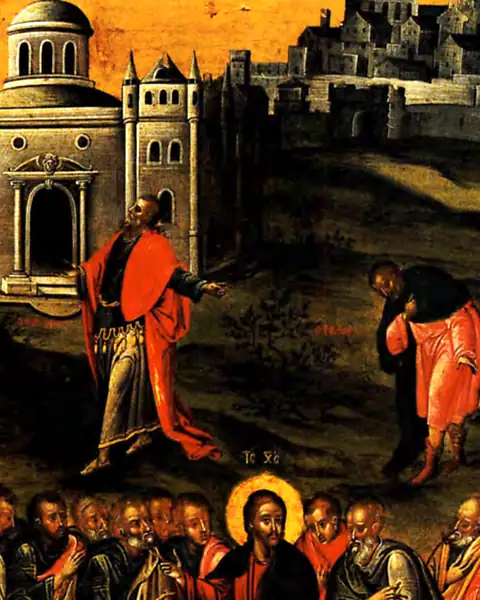
ScriptureMark 2:23–24Jesus tells the parable of the Pharisee and the tax collector.
ScriptureLuke 18:9–14Some Pharisees warn Jesus that Herod wants to kill him.
ScriptureLuke 13:31Jesus pronounces woes on the scribes and Pharisees as hypocrites.
ScriptureMatthew 23Nicodemus, a Pharisee, comes to Jesus by night.
ScriptureJohn 3:1–2Gamaliel, a Pharisee, counsels the council to leave the apostles alone.
ScriptureActs 5:34–39Paul says he was “as touching the law, a Pharisee.”
ScripturePhilippians 3:5Sources: The Holy Bible (World English Bible); Josephus, Antiquities of the Jews.
Drafted from the Bible and Church tradition. Each line says where it comes from; anything marked Tradition or History is not in Scripture itself. Waiting for review by a priest or editor.
Gospel: Matthew 23:1–12
As one of “The scribes and Pharisees”: Teachers of the law with real authority, criticised for not living it.
In the story
Gospel: Luke 16:9–18
Luke says they loved money and scoffed at Jesus’ teaching.
In the story
Gospel: Matthew 16:5–12
A movement devoted to strict keeping of the law and its traditions.
In the story
Gospel: John 12:12–19
They watch the welcome and feel they have lost control.
In the story
Gospel: John 9:1–41
Religious leaders who question him and argue among themselves.
In the story
The Pharisee and the Publican. Venediktos Emporios, 1600–1628. Public domain, via Wikimedia Commons.