In the story
- Fire from heaven? Luke 9:54–56
Person · 3 Sundays
In the readings on 3 Sundays so far.
Name meanings and role notes are drafted with each edition and waiting for review by a priest or editor.
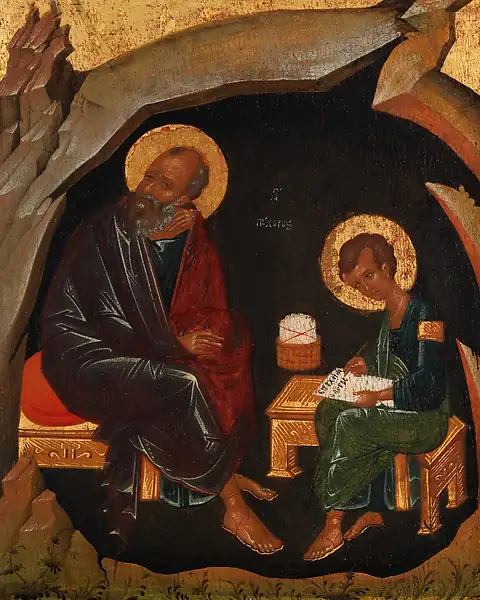
John, son of Zebedee and brother of James, a Galilean fisherman called by Jesus. One of the three closest to the Lord, he became a pillar of the Church in Jerusalem; the Church honours him as John the Theologian, writer of the fourth Gospel.
He leaves the boat and his father to follow Jesus.
ScriptureMatthew 4:21–22Jesus calls him and James Sons of Thunder.
ScriptureMark 3:17With Peter and James he sees Jairus’s daughter raised, the Transfiguration, and the agony in Gethsemane.
ScriptureMark 5:37; 9:2; 14:33With Peter he prepares the Passover meal.
ScriptureLuke 22:8With Peter he heals a lame man at the Temple and stands trial before the council: “We can’t help telling the things which we saw and heard.”
ScriptureActs 3:1–4:20Paul names him with Peter and James as a pillar of the Church in Jerusalem.
ScriptureGalatians 2:9Early writers identify him with the beloved disciple and as author of the Gospel of John, three letters and Revelation, which was written on the island of Patmos.
TraditionIrenaeus, Against Heresies 3.1; Revelation 1:9He lived and taught in Ephesus into old age.
TraditionEusebius, Church History 3.23Sources: The Holy Bible (World English Bible); Eusebius, Church History.
Drafted from the Bible and Church tradition. Each line says where it comes from; anything marked Tradition or History is not in Scripture itself. Waiting for review by a priest or editor.
Gospel: Mark 13:28–37
As one of “Peter, James, John and Andrew”: The four disciples who ask Jesus privately about the end (Mark 13:3).
Gospel: Luke 9:51–62
As one of “James and John”: Brothers among the twelve, quick-tempered enough to want fire from heaven.
In the story
Gospel: Matthew 4:12–22
As one of “James and John”: Sons of Zebedee, partners in a family fishing business.
In the story
John the Theologian and Prochorus, Byzantine icon panel. early 15th century. CC0, via Wikimedia Commons.