In the story
- What David did Mark 2:25–26
Person · 2 Sundays
ദാവീദ്
“Beloved”
In the readings on 2 Sundays so far.
Name meanings and role notes are drafted with each edition and waiting for review by a priest or editor.
The shepherd boy from Bethlehem who became Israel’s greatest king. He defeated Goliath, made Jerusalem his capital, sang many of the Psalms, and received God’s promise that his throne would last for ever. Jesus is called the Son of David.
Samuel anoints him while he is still a shepherd boy; the Spirit of the Lord comes on him.
Scripture1 Samuel 16:1–13He kills Goliath with a sling and a stone.
Scripture1 Samuel 17Jonathan, Saul’s son, loves him as his own soul.
Scripture1 Samuel 18:1–3Fleeing Saul, he eats the holy bread at Nob; Jesus recalls this when his disciples pick grain on the Sabbath.
Scripture1 Samuel 21:1–6; Mark 2:25–26At 30 he becomes king, first at Hebron, then over all Israel.
Scripture2 Samuel 5:1–5He takes Jerusalem and brings the ark of God there with dancing.
Scripture2 Samuel 5:6–9; 6God promises through Nathan that his house and kingdom will be established for ever.
Scripture2 Samuel 7:12–16He takes Bathsheba and has Uriah killed; rebuked by Nathan, he repents.
Scripture2 Samuel 11–12Psalm 51 is headed as his prayer of repentance after Nathan came to him.
ScripturePsalm 51His son Absalom rebels against him and is killed; David weeps for him.
Scripture2 Samuel 15–18Gabriel tells Mary that God will give her son the throne of his father David.
ScriptureLuke 1:32King of Israel roughly 1010–970 BC by common reckoning.
HistorySources: The Holy Bible (World English Bible).
Drafted from the Bible and Church tradition. Each line says where it comes from; anything marked Tradition or History is not in Scripture itself. Waiting for review by a priest or editor.
Gospel: Mark 2:23–28
The young king-to-be who ate the holy bread when he was fleeing Saul.
In the story
Gospel: Luke 3:23–38
The shepherd king, promised a son whose throne would last for ever.
In the story
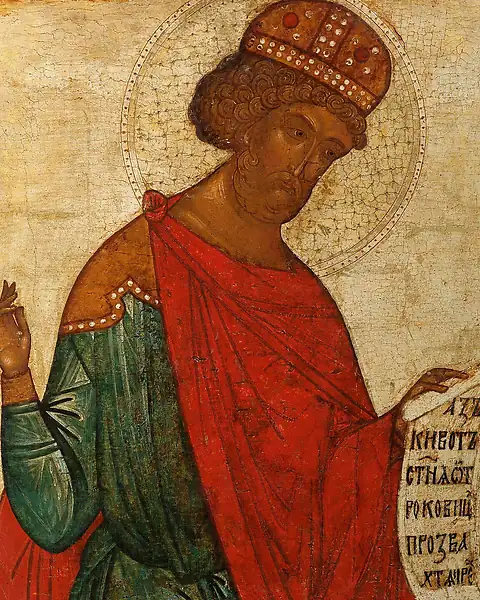
King David, Novgorod school. 15th century. Public domain, via Wikimedia Commons.